At peace · Painting
Old man, mad about painting
In 1834, Hokusai wrote that nothing he'd drawn before seventy was worth noticing, and that he'd have it right by 110.
Katsushika Hokusai · Edo, 1834
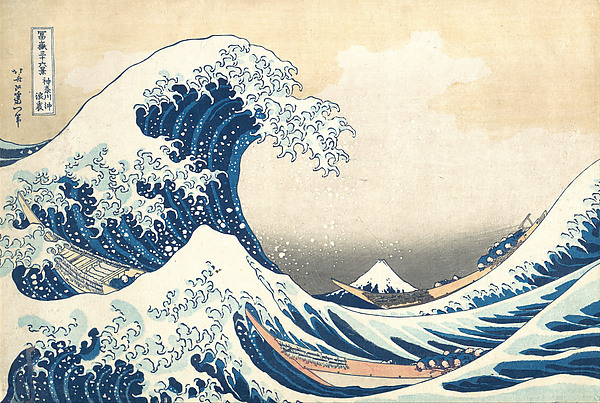
The Great Wave is one of the most recognised images in the world: a claw of water curling over three boats, Mount Fuji small in the distance. Katsushika Hokusai made it around 1830–32, when he was about seventy.
Most artists would call that the peak. Hokusai seemed to think he was only getting started. In 1834, in a note at the end of the first volume of One Hundred Views of Mount Fuji, he looked back on his career so far. He gave his age as seventy-five, by the traditional Japanese count.
He had been copying the shapes of things since he was six, he wrote, and his pictures had been published often since he was about fifty. But until the age of seventy, "nothing I drew was worthy of notice." At seventy-three he had begun to understand how plants and trees grow and how birds, animals, insects and fish are made. By eighty he hoped to have made more progress, by ninety to see further into the nature of things, by a hundred to reach something close to mastery. And after that:
…at 110, every dot and every stroke will be as though alive.
Hokusai, 1834, translated by Henry D. Smith II
Around then he signed his work with a new name, Gakyō Rōjin Manji, usually translated as "Old Man Mad About Painting." He used some thirty names over his life, and moved house so often that it became part of his legend.
Still learning
He kept working into his final years and died in 1849, at nearly ninety. The story goes that near the end he asked for just a few more years to become a true artist. Whether or not he said it, it sounds exactly like him.
Sources
Next story
The lap he couldn't explain