
At the edge · Music
The symphony he could barely hear
On 7 May 1824, a profoundly deaf Beethoven stood in front of the orchestra for the first performance of his Ninth.
Ludwig van Beethoven · Vienna, 1824
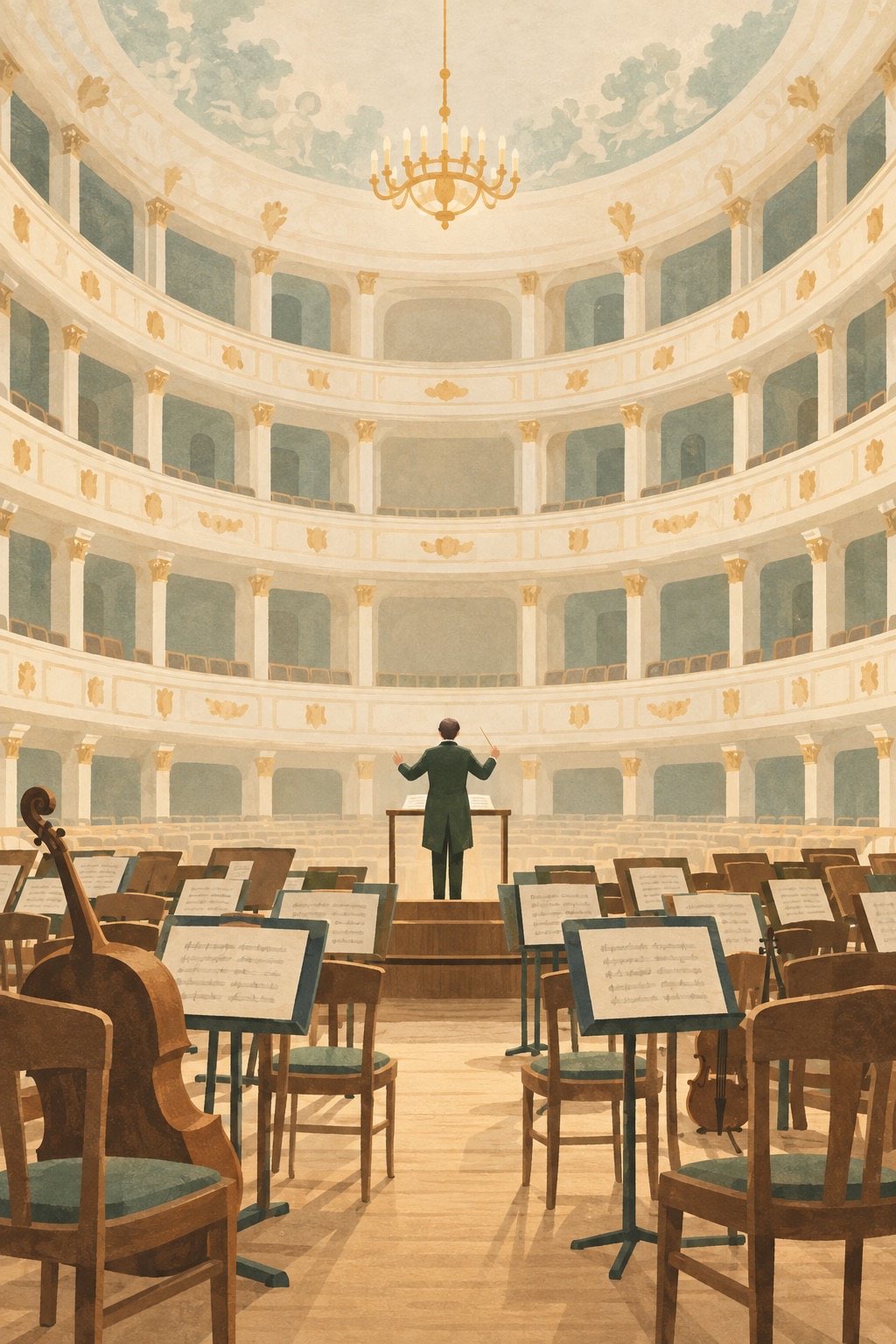
By 1824, Ludwig van Beethoven could no longer follow an ordinary conversation. From 1818 on, visitors increasingly wrote their half of every exchange in notebooks, and he answered them aloud.
That May, at the Kärntnertortheater in Vienna, his Ninth Symphony was played for the first time. It was a huge piece, and its last movement did something nobody expected from a symphony: it brought in soloists and a full chorus, singing words adapted from Friedrich Schiller's poem "An die Freude", the "Ode to Joy".
Beethoven stood on stage and marked the tempos. The musical direction came from Michael Umlauf, who stood beside him. Years later, the violinist Joseph Böhm remembered how it worked:
We musicians followed his baton only.
Joseph Böhm, violinist, recalling Umlauf at the premiere
So picture it: the composer in front of the players, beating time, while the sound he had carried in his head for years filled the hall around him, and he could barely hear it.
Turning around
According to later accounts, when the applause came Beethoven was still facing the orchestra, and the contralto Caroline Unger turned him around so he could see it. The sources disagree about exactly when it happened, after the second movement or at the very end, and historians have spent a long time separating the premiere from the legends that grew up around it. Some scholars now think he kept a little hearing even then.
What isn't in doubt is what he had done. A man who couldn't follow a conversation had written music that is still played all over the world two centuries later, and he stood up in front of it on the night it was heard for the first time.
Sources
Next story
Learning by doing